Posts

Ivanhoe, a historical Novel by Sir Walter Scott

Image
Ivanhoe narrates the story of one of the remaining Anglo-Saxon noble families during an era where the English nobility was overwhelmingly Norman. The plot observes the story of the Saxon protagonist, Sir Wilfred of Ivanhoe, who has fallen in his father's disfavour for his allegiance to the Norman King Richard the Lionheart. Richard the Lionheart The plot is set in 1194, , follwing the defeat of the Third Crusade, , where many of the Crusaders were still returning home in Europe. King Richard, encaptured by Leopold of Austria during his journey back to England was believed to still be in captivity. The location of the novel is centred upon southern Yorkshire and northern Nottinghamshire in England. Castles mentioned within the story include Ashby de la Zouch Castle (now a ruin in the care of English Heritage), York (though the mention of Clifford's Tower, likewise an extant English Heritage property, is anachronistic, it not having been called that ...

Hanukka: The Origins of the eight-day and night Jewish Holiday

Image
Hanukkah , which in 2018 begins at sundown on Sunday, Dec. 2, is one of the most widely celebrated Jewish festival of lights in the United States. Hanukka , or (less commonly) Chanukah, Hanukah is the 8-day Jewish holiday beginning on the 25th of Kislev and commemorating the rededication of the Temple of Jerusalem after its defilement by Antiochus of Syria. Hanukkah traditions include lighting candles, giving presents, playing games and eating food fried in oil, like doughnuts or potato pancakes. Star of Wonder, Vintage Framed Jewelry brooch star of David History of Hanukka More than 2000 years ago there was a time when the land of Israel was part of the Syrian-Greek Empire, dominated by Syrian rulers of the dynasty of the Seleucids . In order to relate the story that led up to Chanukah, we shall start with Antiochus III, the King of Syria, who reigned from 3538 to 3574 (222-186 B.C.E.). He had waged war with King Ptolemy of Egypt over the possession of the ...

Who dies when "Charlie's Dead'?

Image
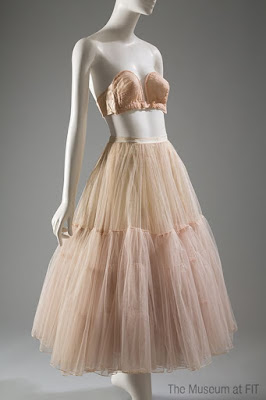
Fortunately, there is no bereavement if "Charlie' s Dead". The now obsolete phrase, "Charlie's Dead" is enlisted amongst the Six Innocent Phrases and their Morally Suspect Origins" (Referenced below). "Charlie's Dead was said when a lady's petticoat was showing below her dress or skirt. Yet, where did this lingerie allusion generated from? King Charles II "It refers apparently to King Charles who was rumored to be an alley cat (c.c. a womanizer) of his time. When he perished, women flashed their petticoats as a sign of respect. King Charle's best known mistress was Nell Gwynn. On his deathbed, Charles is alleged to plead his wife to "Not Let Poor Nellie starve". "Charlie's Dead is not a massively common expressin and with good reason. You'd subtly whisper "Charlie's Dead" to a woman if her petticoat was showning below the hem of her skirt, which...

Which was the first Black Friday in History?

Image
The retail bonanza known as Black Friday is now an integral part of many Thanksgiving celebrations but this holiday tradition has darker roots than the shopping frenzy it alludes to. First recorded use of the term "Black Friday" was employed not to holiday shopping but to financial crisis : Specifically, the crash of the U.S gold market on September 24, 1869 Two notoriously ruthless financiers, Jay Gould and Jim Fisk plotted to buy up as much as they could of the nation's gold hoping to drive the price sky-high and then sell it for astonishing profits. It was on that Friday in September that the conspiracy finally unraveled, sending the stock market into free- fall and bankrupting everyone from Wall Street barons to farmers. The popular story behind the post-Thanksgiving shopping-related Black Friday tradition links to its retailers. After an entire year of operating at a loss in the red , stores would supposedly earn a profit went into t...

Bilingualism: the sooner, the better!

Bilingualism: the sooner, the better!

Meet the medieval Shambles inYork, UK

Image
The York's medieval quarter that is known as the Shambles is a favourite amongst visitors' attractions. Shambles is an archaic term for an al fresco slaughterhouse and meat market. An interestingly good amount of history could be revealed by a place name. Such is the case of the aptly named "The Shambles", the beautiful medieval cobbled street in York that was once lined with butchers' shops and stalls, or benches for displaying meat known as " Shamels " in the Anglo-Saxon dialect of the era. The meat was hung up outside the shops and laid out for sale on what are now the shop window-bottoms. It is still possible to see some of the original butcher’s meat-hooks attached to the shop fronts. Lacking modern-day sanitation facilities, there was a constant problem of how to dispose of the waste produced by the slaughter of animals in the city. The pavements are raised either side of the cobbled street to form a channel wher...

Morston Quay

Image
Morston Quay, Norfolk.🇬🇧️ The place-name "Morston" means "marsh town or settlement".🛶 Like its neighbour Blakeney, Morston, used to be a major port 400 years ago, but is now only used by a small number of fishing boats, leisure craft and the regular seal watching trips which leave for Blakeney Point.