Posts

Showing posts with the label semiotics

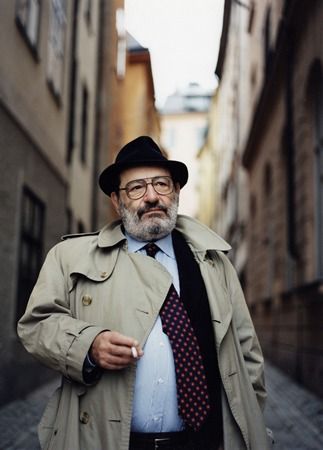
Umberto Eco an outstanding intellectual who influenced the study of semiotics and memory
Image
 Umberto Eco was born 5 January, 1932 in the city of Alessandria, in the Italian region of Piedmont, in the middle of Genova, Milan and Turin triangle.  He died in Milan, in 19 February, 2016  Umberto Eco by Ulla Montan  Eco never founded a semiotics school, but his thought has heavily influenced the field of semiotics, in many areas, like no other's.  As for Eco's contribution to the study and popularization of semiotics,  Rocco Capozzi (2016), observes:  "Eco was a much admired icon of culture, a most respectable author, a beloved professor, an outstanding speaker [...], the epitome of an intellectual who could fuse erudition and popular culture, especially in the genre or historical thrillers"  To the often-asked question of why people would buy and read his difficult novels, Eco replied, "people are tired of simple things. They want to be challenged" (The Guardian, November, 30, 2011). His unique style was grounded in his unmatchable skills of...

Umberto Eco 一 «Noi siamo la nostra memoria. Quando morirò, ricorderò tutto»

Image
☆ As humans, when we say "I", we mean our memory  ☆ Memory is selective ☆ Shared memories mean common identity, ☆ Semantic memory is what we know about the world ☆ We are made of time ☆ Without memory, there is no soul  ☆ Fathers die when they stop telling us what they know and begin asking us something new  ☆ The day I'll day I'll remember everything

Carnivalesque customs of Thrace: The timeless value of satire practiced through rituals

Image
  By: Marina Siskos Published in the Greek Herald  https://greekherald.com.au/culture/history/carnivalesque-customs-of-thrace-the-timeless-value-of-satire-practiced-through-rituals/?fbclid=IwAR383O4Bg0MzPE2Pm8_FHXAupa8cPpwKjAE8PHhNAUiAAHw3k8mFNlyKDhw Carnival customs are observed on the first Sunday of Christian Orthodox fasting, The Tyrian Sunday, alongside most significant Thracian customs Thrace is Dionysus’s birthplace. Dionysus, or Bacchus, was the god of the grape-harvesting, winemaking, vegetation and fertility. Dionysus was the son of Semeli and Zeus (Moutsopoulos, 2016). Thracian festivities celebrated to this day are sharply reminiscent of Dionysus’s characteristic shenanigans (Moutsopoulos, 2016). The customs known as  Kopek   Mpehis  and the  Monks , as described in narrative skillfulness by the master of  ethnographia , Georges Vizeynos, date back to the antiquity. Representations of the carnivalesque customs and practiced are preserved wi...

Julia Kristeva and the Political

Image
 Julia Kristeva, 1941  The psychoanalytic concept of symbolic law refers to the form-giving function of social structures and institutions including language itself;  Symbolic law supports bodily experiences and semiotic drives in meaningful signifying systems.  Today, loving forms of social support are rare, as bodies silently suffer the disconnection from form-giving law, law itself "suffers" the disconnection of drives and affects [...].  These resonances deepen in Kristeva's more recent three-volume series on the "powers and limits of psychoanalysis" - The Sense and Nonsense of Revolt (1996), - Intimate Revolt (1997), -Hatred and Forgiveness (2005).  There, she connects the emptying of symbolic law to the elaboration of regulatory power that reduces subjects to bodies of organs, bios to zoe.  Engaging implicitly, if not explicitly with biopolitical themes, Kristeva warns that the expansion of regulation produces a "Life and Death" [...] a life for ...

Marina Abramovic's Relentless, Violent Genius | Brilliant Ideas Ep. 26

Image
1.     H Τομή της Marina Abramovic “The moment the performance is finished, it’s already future. Performance is all about the   present- the here and now, and nothing else”. Marina Abramovic Η Marina Abramovic  έχει   κατακτήσει   εξέχουσα   θέση   στην   ιστορία της  performance (Abramovic & Illes, 1998). H καλλιτέχνις από την πρώην Γιουγκοσλαβία έχει δημιουργήσει έργα, αξιοποιώντας ως μέσα: το βίντεο, την παράσταση (performance), τη φωτογραφία, τον ήχο και το κείμενο, το οποίο έως τις αρχές του 1970 είχε ακόμη ουσιαστικό αντίκτυπο (Abramovic, Illes, 1998). Όλα της τα έργα συνέχονται από την παρουσία και την ενέργεια του κοινού, στοιχεία οργανικά για την πραγμάτωση του έργου (Abramovic, Illes, 1998). H πορεία της καλλιτεχνικής της δημιουργίας άρχισε να προδιαγράφεται από την μήτρα της ανατροφής της στο ορθόδοξο σερβικό περιβάλλον της προνομιούχας κοινωνίας του κομμουνισμού (Martin, 1995). Γεννημ...

Christian Metz's Film Semiotics Part 2: Syntagmatic vs Paradigmatic

Image

Christian Metz's Semiotic Film Theory

Image